
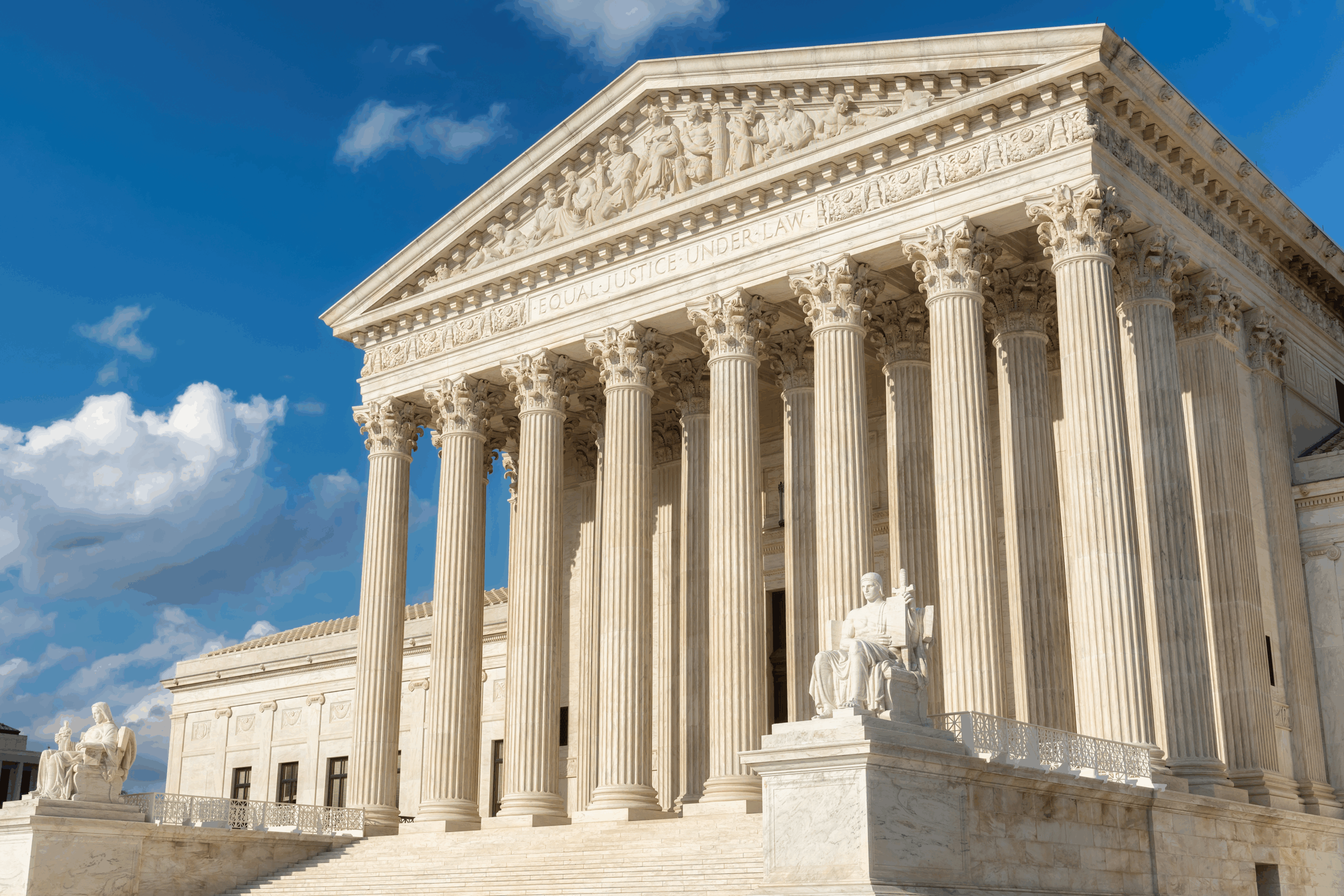
The Supreme Court rejected a challenge to an EPA rule on Monday that governed the phasing out of certain refrigerants.
The New Civil Liberties Alliance, who represent a company that deals in aftermarkets for refrigerants, asked the court this February to overturn a lower court ruling that upheld the EPA’s rule on the use of hydrofluorocarbons (HFCs). HFCs were formulated as a safer alternative to older refrigerants that scientists concluded caused Ozone layer depletion.
“The current nondelegation doctrine is broken, possibly beyond repair. This case showed that the D.C. Circuit — where many of the nation’s most important environmental cases must be litigated — is incapable of correctly applying the doctrine,” Mark Chenoweth, president of the alliance, said in a statement to Politico E&E.. “If the Supreme Court is not going to replace the doctrine, or at least attempt to repair it, then Congress needs to stop the injustice of requiring cases like this one to be decided exclusively in the D.C. Circuit.”
The phase-out of HFCs was ordered under the first Trump Administration in 2020. The New Civil Liberties Alliance argued that the regulation “failed to supply clear direction to EPA,” and that their efforts were aimed at dismantling the “administrative state.”
“The Air-Conditioning, Heating and Refrigeration Institute, an industry coalition, also defended EPA at the Supreme Court, arguing that taking up the alliance’s petition would be ‘especially unwise because any reversal would have calamitous effects on the American refrigerant industry.’”
The coalition warned that a reversal of EPA’s HFC phase-down program would give a competitive advantage to foreign-based manufacturers of bulk HFCs and equipment who did not invest in the phase-down.”
The case was the latest attempt to revive the “non-delegation doctrine,” which states that Congress cannot transfer its legislative power to another branch of government. The Alliance argued the 2020 law violated the doctrine, but the Supreme Court has so far been hesitant to definitively rule on the matter.
Read more in Politico E&E.