
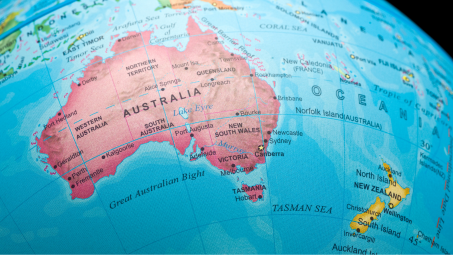
Rationing is now being discussed in Australia and New Zealand after the closing of the Strait of Hormuz created a fuel shortage.
Energy security has never been more important.
But how did Australia and New Zealand get to the point where there is not enough gas?
John Gustavsson highlights in National Review how those countries’ environmental policies are also to blame.
In the year 2000, Australia had eight refineries. Today, only two remain, fulfilling less than 20 percent of the country’s needs. While the Australian government argues that the shutting of refineries was the result not of policy but of the private decisions by the businesses operating them, this misses a key point: Businesses, in Australia and elsewhere, were made to understand that refineries would soon be “stranded assets” in the future “net-zero” economy, and they acted accordingly.
As for New Zealand, its only refinery closed in 2022 under Prime Minister Jacinda Ardern and was converted into an import terminal. Prior to that, in 2018, the same government had introduced a ban on oil and gas exploration, a key part of its plan to transition the nation to a “carbon-neutral future.” The ban was repealed last year, but it was too little, too late to prevent the current crisis. While New Zealand’s only refinery was not built to handle the kind of oil found in the Taranaki basin, it could — albeit inefficiently — nevertheless have produced enough fuel from such oil during an emergency such as this one to keep ambulances, fire engines, and food distribution trucks running in perpetuity.
While Australia does not ban such exploration outright, stiffening climate regulations (both federal and local) have made it increasingly difficult, and domestic oil production has dropped 90 percent since the year 2000 to a pitiful 69 million barrels (equivalent to what Texas produces in eleven days).
[…]
This lack of preparedness is uncharacteristic for both Australia and New Zealand. Both nations pride themselves on being major agricultural exporters with the ability to keep their people fed indefinitely even if cut off from the world, as happened during World War II, which Australia and New Zealand both made it through without the type of draconian food rationing introduced in Britain. Yet in the end, agriculture runs on fuel, not on virtue.
Read more in the National Review.